
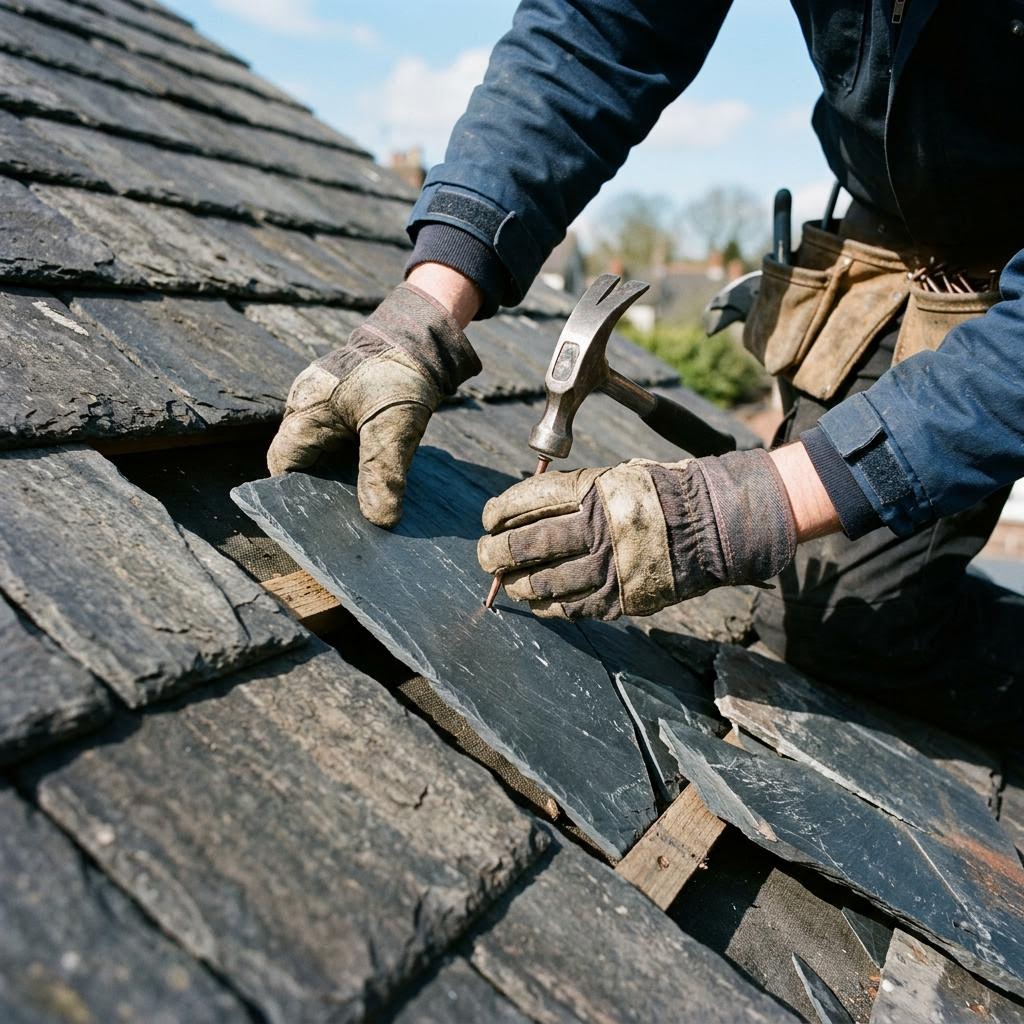
Roof Repairs for Melbourne Homes
Effective roof repair starts with finding the path water or weather is taking, not simply treating the most visible stain. A clear inspection can narrow the cause and define whether a targeted repair or wider roof work is appropriate.
Bottom line: act early when you notice water marks, slipped tiles, loose ridge capping, rust, damaged flashing or overflowing gutters. The quote should identify the likely cause, proposed repair and any areas that could not be confirmed without further investigation.
Common sources of roof leaks and damage
Water can travel along battens, rafters and insulation before it becomes visible indoors, so the ceiling mark may not sit directly below the defect. Broken tiles, lifted sheets, deteriorated seals, valleys, flashings and roof penetrations are common investigation points.
Wind-driven rain can expose weaknesses that stay dry in light rain. Blocked or undersized drainage paths can also push water into places it would not normally reach.
Tile roof defects
Cracked, displaced or porous tiles, deteriorated bedding and pointing, and debris in valleys.
Metal roof defects
Loose or aged fasteners, corrosion, lap issues, damaged sheets and flashing transitions.
Drainage defects
Blocked gutters, poor falls, damaged outlets and overflow paths that direct water toward the building.
What a useful repair quote should explain
A useful scope distinguishes the observed symptoms from the proposed cause. Photos and plain-English notes help you compare recommendations, especially when different roofers suggest different solutions.
Ask whether the price covers access, replacement materials, disposal, sealants or coatings, clean-up and follow-up checks. If parts of the roof cannot be assessed safely, that limitation should be stated.
Urgent leaks and safe next steps
During heavy rain, protect people first and keep clear of wet ceilings, electrical fittings and slippery roof surfaces. Place containers only where it is safe and contact an appropriate emergency service if there is structural movement, electrical risk or immediate danger.
Permanent roof work may need dry and safe conditions. Ask what temporary measures are available and what needs to happen before the final repair can be completed.
Frequently asked questions
Can a roof leak be diagnosed from inside the house?
Interior evidence is useful, but it may not reveal the entry point because water can travel before appearing. Roof-surface and roof-space checks may both be needed where access is safe.
Is one broken tile always the cause of a leak?
Not always. A broken tile may be obvious, but flashing, valleys, pointing, penetrations or drainage can contribute. The surrounding area should be checked before the repair scope is finalised.
Compare the scope, not just the headline
A useful roofing quote explains observed conditions, proposed work, exclusions and the next safe step in plain English.
Check Melbourne service-area information